Shop FRT-15 For Sale Now – Limited Stock Ready to Ship
When your production line needs a compact, high-torque rotary solution, the FRT-15 for sale delivers immediate, precise indexing with its 15:1 gear ratio and minimal backlash. This ready-to-mount unit integrates directly into existing automation setups via its flanged output and keyed shaft, requiring only a standard hydraulic or electric motor input to begin operation. Its hardened steel gears and sealed housing ensure consistent positioning accuracy over extended duty cycles, reducing downtime and maintenance frequency. Simply bolt it into place, couple your drive source, and adjust the integrated cam limit switches to set your exact rotation stops for repeatable, reliable performance.
What Exactly Is the FRT-15 and How Does It Work?
The FRT-15 is a forced reset trigger, a drop-in replacement trigger group for AR-15 pattern rifles, designed to mimic the shooting cadence of a full-auto firearm while remaining mechanically semi-automatic. When you search for an frt-15 for sale, you are buying a unit that uses a unique lever system. After the bolt carrier cycles rearward, a spring-loaded trip lever pushes the trigger forward, forcing it to reset without the shooter’s finger leaving the trigger face. You then simply press forward against this returning motion, and the hammer drops again, allowing for rapid, bump-fire-like shots. Unlike binary triggers, which fire on pull and release, the FRT-15 uses the bolt’s recoil energy to reset, meaning the trigger’s forward travel is powered, not manual.
Practically, the firing speed depends entirely on how quickly you can release pressure and re-apply it against the forward-forced trigger, so https://rarebreedtriggertx.com/ grip technique is critical.
Buying one means installing a part that fundamentally changes the trigger’s tactile feedback, replacing the standard wall and reset with a continuous, oscillating push-pull cycle.
Breaking Down the Forced Reset Trigger Mechanics
The core of the forced reset trigger mechanics lies in the bolt carrier’s rearward travel physically pushing the trigger forward, which resets the sear before the shooter ever releases it. This means your finger only controls the first stage; the bolt’s momentum does the reset work automatically, creating a cycle faster than manual operation. The trigger’s flat face rides against the carrier’s bottom, using a cam-like interface to strip the sear engagement without relying on a standard trigger spring. You’ll feel a sharp, short pull that ends abruptly, not a mushy wall, because the reset is mechanical, not shooter-dependent. As the bolt returns, it also prevents the trigger from following the hammer, so your pull remains consistent shot-to-shot. This precise interaction demands a tight tolerance between the trigger shoe and carrier, which is why the design works best with a standard mil-spec bolt carrier group.
Realistic Rate of Fire vs. Standard Triggers
The FRT-15’s realistic rate of fire versus standard triggers hinges on a mechanical distinction: a standard trigger resets only after the shooter fully releases it, while the FRT-15’s internal lever rides the bolt’s forward motion to reset the sear without a finger lift. In practice, this yields a cyclic rate of 400–600 rounds per minute, but only if the shooter maintains a *firm, constant rearward pull*—any flinch or grip shift disrupts the reset, dropping output to semi-auto speeds. A standard trigger fires one round per deliberate pull, capping at roughly 60 rounds per minute for most users. With the FRT, the practical bottleneck is not the trigger but the shooter’s recoil control and shoulder stability; standard triggers offer no such dependency, prioritizing precision over volume. You sustain the faster rate only while your trigger finger stays locked, whereas a standard trigger rewards a clean, repeatable press each cycle. For a buyer, frt 15 trigger this means the FRT-15 transforms shooting pace into a skill-based exercise, not a guaranteed auto-like dump.
Compatibility with AR-15 and LR-308 Platforms
The FRT-15 trigger is engineered for **drop-in rare breed triggers in stock compatibility with AR-15 platforms** using standard mil-spec lower receivers, requiring no permanent modification to the fire control pocket or hammer pins. For the LR-308 (DPMS pattern), the same trigger body fits, but you must verify bolt carrier geometry—unlike AR-15 carriers, some .308 BCGs have a wider rear lug that can interfere with the trigger’s reset lever. You will also need a heavier buffer (H2 or H3) tuned to the LR-308’s longer recoil stroke to ensure the sear trips reliably. The trigger’s hammer profile is cut for both, but LR-308 users should test with a full-loaded magazine to confirm bolt-override clearance. Always check your specific lower’s shelf height—Aero Precision and Anderson LR-308 lowers typically accept it, while some billet receivers require a 0.154-inch pin swap.
Key Features to Inspect Before Buying the FRT-15
Before committing to any FRT-15 for sale, inspect the trigger’s sear engagement surface for uniform, unpolished wear—factory finishes resist hammer follow better than aftermarket buffing. Check the housing’s pin holes for ovaling; a loose fit causes timing shifts under rapid fire. Examine the disconnect’s trip lip for burrs or rounded edges, which directly affect reset reliability. Verify the trigger bow’s spring channel is clear of debris and that the hammer’s notch isn’t peened from dry-fire practice. Also confirm the rear take-down lug isn’t cracked, as that stress point dictates bolt carrier travel. Function-test with snap caps: a crisp, consistent reset at the same trigger position signals correct geometry.
A unit that resets early or drags during slow manipulation will fail under live fire.
Request a video of the actual unit cycling before payment—never rely on stock photos for wear assessment.
Material Quality and Machining Tolerances
Before committing to an **FRT-15 for sale**, scrutinize the metal grade and surface finish of the trigger and sear engagement surfaces. High-quality units use hardened ps90 frt trigger tool steel or billet stainless, not cast pot metal, which wears rapidly and ruins the reset. Check that all pin holes are precisely reamed, not punched, to prevent sloppy fitment and timing issues. Machining tolerances should be tight—sub-0.005-inch variance between the trigger bow and housing—ensuring crisp, consistent actuation. A rough or burred edge on the trip lever indicates poor CNC work and will accelerate component fatigue. Ask the seller directly about their QC inspection process, including whether they verify dimensions with go/no-go gauges.
Q: What is the most critical machining tolerance to verify on an FRT-15?
A: The clearance between the sear trip and the bolt carrier’s cam ramp—if this gap exceeds 0.010 inches, you risk misfires or hammer-follow, so demand caliper-measured specs before purchase.
Drop-In Installation vs. Gunsmith-Fitted Models
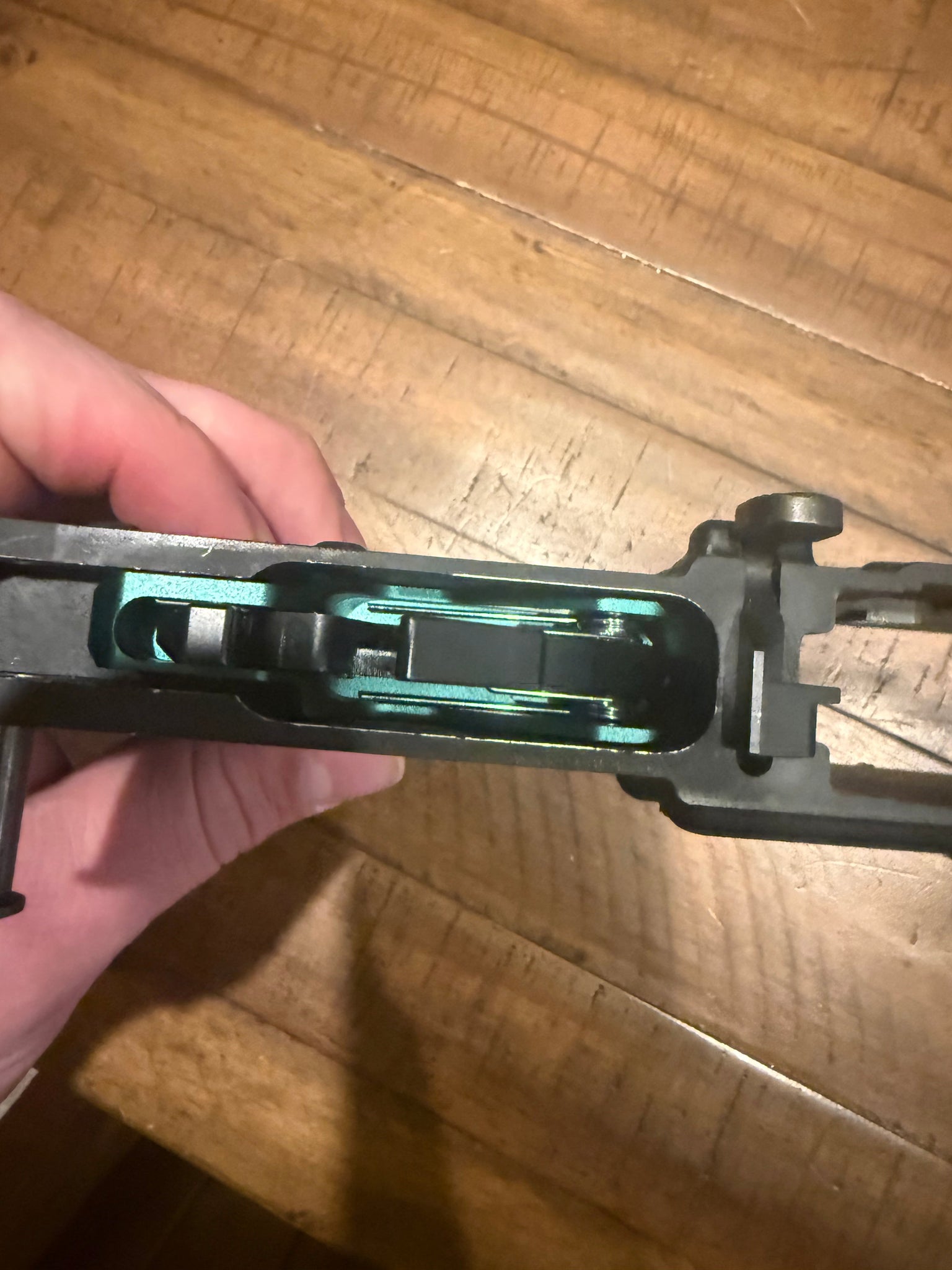
When evaluating an FRT-15 for sale, the first major fork is drop-in installation versus gunsmith-fitted models. A drop-in unit slips directly into your existing lower receiver’s trigger pocket, requiring no permanent modifications—ideal if you want instant swap-back to mil-spec for range compliance or resale. Gunsmith-fitted versions, however, demand careful sear engagement adjustment and sometimes receiver filing, but they often deliver a crisper, more consistent reset and reduce hammer-follower friction over thousands of rounds. Before purchasing, test the drop-in’s pin alignment with your specific lower—tolerances vary by manufacturer—while a fitted model should be evaluated for over-travel and creep post-installation. Your choice hinges on mechanical comfort: drop-in favors speed and reversibility; fitted favors precision tuning.
Drop-in offers plug-and-play convenience with zero permanent changes, while gunsmith-fitted models trade installation effort for optimized trigger geometry and reliability.
Adjustable Reset Tension for Different Ammo Types
When evaluating an **FRT-15 for sale**, the adjustable reset tension is your direct lever for reliability across diverse ammunition. Lighter, high-velocity loads often require reduced spring pressure to cycle smoothly, preventing short-strokes, while heavier, full-powered cartridges demand increased tension to avoid bolt bounce or premature follow-up fires. Test the selector’s detent or screw range—it should offer a tactile, incremental change without needing tools. A crisp, predictable reset at each setting ensures the trigger resets positively but not sluggishly, keeping your cadence consistent. Adjustable reset tension for different ammo types transforms a one-size-fits-all trigger into a tuned system. Q: How do I know if the reset tension suits my primary ammo? A: Load a full magazine of your chosen round, fire at a controlled pace, and listen for any hesitation or double-fire—if neither occurs, the current setting is optimal.
Practical Usage Tips for Your FRT-15
Once your FRT-15 for sale arrives, skip the dry-fire practice—the forced-reset trigger’s timing demands live ammunition to feel the double-tap rhythm. Start with a heavy buffer and standard-pressure ammo to smooth the reset cycle, then tune down only after 200 rounds. Keep your grip high and firm; a loose hold will cause the trigger to slam forward inconsistently. Also, lubricate the trigger pocket with a light grease, but avoid over-oiling—excess attracts carbon that slows the reset. For rapid drills, practice a deliberate “release then press” motion rather than mashing, as the FRT-15 rewards precision over speed.
Master the two-stage feel: the forced reset is your cue to release, not fight, the trigger.
Lastly, test with a shot timer to confirm your split times improve, not just cycle speed—that’s the real payoff from your purchase.
Proper Grip and Finger Placement for Rapid Resets
For rapid resets with an FRT-15, grip height and pressure distribution dictate trigger control. Keep your support hand high on the handguard to stabilize recoil, while your firing hand maintains a firm, neutral wrist—avoid overtightening, which induces finger drag. Place the pad of your index finger, not the joint, squarely on the trigger shoe, ensuring a straight rearward pull that minimizes lateral friction during the reset cycle. The reset travel on an FRT-15 is short, so your finger must lift only marginally—excess movement kills cadence. Practice a shallow, metronomic release, letting the trigger’s internal spring push your finger forward rather than actively extending it. This passive reset technique reduces fatigue and sustains high-speed fire. Finger placement for FRT-15 rapid reset hinges on consistent contact point and minimal travel. Q: How do I avoid short-stroking the reset? A: Keep your fingertip lightly preloaded against the trigger after each shot, and focus on a quick but controlled forward release—just enough to hear the click, then immediately press again.
Lubrication Points That Prevent Misfeeds
For wot trigger an FRT-15 to cycle reliably, lubrication points that prevent misfeeds are the sear trip lever pivot, the trigger pack’s cam track, and the bolt carrier’s rear lug contact patch. Apply a thin grease (not oil) to the trip lever’s axle and the cam’s curved slot—dry friction here causes delayed hammer release, which stalls the carrier mid-cycle. Grease the carrier’s rear lug face where it strikes the trip; a light film reduces bounce-back that skips the next round. Wipe the hammer’s striking face clean—residue there disrupts primer seating. Reapply every 300 rounds; excess lube attracts carbon, so use a cloth to remove visible buildup.
Testing with Different Buffer Weights and Springs
When testing the FRT-15, start with the factory carbine buffer and spring to establish a baseline. Swap to a heavier buffer (H2 or H3) to tame bolt bounce and reduce felt recoil, but watch for short-stroking if the trigger fails to reset. Conversely, a lighter buffer increases cyclic speed, which can expose weak hammer springs; test with snap caps first during dry-fire function checks. For suppressed setups, buffer weight tuning is critical to avoid bolt over-travel. Sequentially: 1) install test buffer, 2) fire three-round groups, 3) check for hammer follow, and 4) lubricate the carrier rails if malfunctions appear. Use a variable-weight buffer kit to isolate spring rate versus mass effects—stiffer springs often fix sluggish resets, while softer springs cause premature out-of-battery detonations.
Comparing FRT-15 Options to Match Your Shooting Style
When you’re scanning frt-15 for sale, the first thing I do is weigh how the trigger’s reset length feels against my natural cadence—if I’m shooting fast double-taps on steel, I pick a curved shoe with a shorter pull; for prone precision drills, the flat-faced version with a crisper break keeps my finger from slipping. I’ve burned through three brands at the range, and the difference is never the parts list—it’s the spring tension that matches whether I ride the reset or slap through it. Ask yourself: do I prefer a rolling break for speed or a hard wall for control? That single answer dictates if you buy a lightened skeletonized carrier or a full-mass bolt, because a heavier carrier soaks up the bump-fire recoil, while a lightweight one lets the trigger trip faster but feels snappier. I keep one of each in my bag now—swapping them based on whether I’m shooting in a timed match or just plinking with friends.
Selecting Between Gen 2 and Gen 3 Versions
When comparing FRT-15 options, selecting between Gen 2 and Gen 3 versions hinges on trigger weight and reset behavior. The Gen 2 typically offers a heavier, more deliberate pull, which suits shooters prioritizing control during slow fire, while the Gen 3’s lighter, crisper break enables faster follow-up shots in competitive drills. Examine the hammer geometry: Gen 3 features a redesigned sear engagement that reduces friction, improving reliability with high-round-count magazines. For suppressed hosts, the Gen 3’s enhanced gas port tolerance prevents bolt bounce, a common Gen 2 issue. However, Gen 2’s simpler internal spring set is easier to tune for lighter buffer systems. Selecting between Gen 2 and Gen 3 versions ultimately demands aligning your primary platform—pistol lowers favor Gen 3’s snappier cycle, rifle builds tolerate Gen 2’s heavier cadence. Always test both on your actual upper before purchase.

Q: Which generation reduces trigger-slap fatigue during extended range sessions?
A: Gen 3, due to its shorter lock time and reduced over-travel, which minimizes finger jarring and allows sustained rapid fire without losing tactile feedback.
Choosing a Model for Pistol Builds vs. Rifle Builds
When you’re comparing FRT-15 options for sale, the platform matters more than raw trigger feel. For a pistol build, you need a model with a compact hammer and lightweight bolt carrier profile—these resist bolt bounce during fast, short-stroke cycling, especially with a brace instead of a stock. Rifle builds, meanwhile, tolerate heavier carriers and longer receivers, letting you pick any full-size FRT-15 without worrying about gas tube alignment. A pistol’s shorter dwell time also demands a trigger with a crisp reset; rifle-length FRT-15s often have a softer reset that pairs better with a longer buffer system. Test fire with your specific upper—pistols often need a heavier buffer, rifles don’t.
Q: What’s the biggest trap when choosing a model for pistol vs. rifle builds?
A: Grabbing a rifle-tuned FRT-15 for a pistol—you’ll get double fires or sluggish resets. Match the trigger’s carrier trip geometry to your build’s bolt travel.
Accessory Upgrades That Boost Trigger Reliability
To maximize FRT-15 trigger reliability, prioritize a reinforced hammer spring—it prevents light strikes during rapid reset cycles. Replace the factory disconnect with a billet unit machined to tighter tolerances, eliminating gritty catch points that cause skip-fires. A polished trigger bar and sear engagement surface reduce friction-induced drag, ensuring the bolt resets fully under high-speed manipulation. Upgrade to a hardened steel trigger pin with a retention clip, as polymer pins flex and bind under sustained fire. Finally, install an anti-walk kit with set screws; loose tolerances allow lateral movement that disrupts the forced-reset timing. Sequence: 1) swap springs, 2) fit disconnect, 3) polish contact surfaces, 4) pin retention, 5) anti-walk alignment.

Common Questions About Using and Maintaining This Trigger

Buyers of an frt-15 for sale often ask if the trigger requires specialized lubrication. Use a light CLP on the sear engagement surfaces, but avoid soaking the mechanism—excess oil attracts carbon and causes sluggish reset. Another frequent question involves the “breaking-in” period; expect 200–300 rounds before the cam track smooths out, and do not disassemble the trigger pack during this time unless absolutely necessary. If you experience hammer-follow, check that your buffer weight and spring match factory specifications, as an under-buffered carbine disrupts the forced-reset timing. For cleaning, avoid submerging the unit in solvent; instead, spray brake cleaner sparingly and re-oil immediately. Finally, always verify that the trigger is fully seated in the lower receiver—a loose pin causes intermittent function. Trigger maintenance intervals should align with every 1,000 rounds to ensure reliable reset under sustained use.
How Many Rounds Before Parts Wear Out?
The service life before parts wear out on an FRT-15 depends heavily on the trigger’s carrier and sear engagement surfaces, not the lower receiver. Most users report the primary trip lever and reset spring begin showing measurable wear between 8,000 and 12,000 rounds, typically manifesting as intermittent double-fire or failure to reset. The hammer and disconnector, however, often last 15,000–20,000 rounds if you apply grease to the contact pads every 500 rounds. Carbon fouling accelerates wear far more than round count—a dirty cam track can cut lifespan by half. Inspect the sear edges with a magnifier every 2,000 rounds; if you see rounding, replace the trip kit immediately to avoid slam-fires.
Can You Use the FRT-15 for Controlled Pair Drills?
Yes, you can use the FRT-15 for controlled pair drills, but it requires deliberate trigger discipline because the forced-reset mechanism inherently encourages a full cycle. Unlike a binary or standard trigger, the FRT-15’s reset is aggressive, meaning you must consciously feather the trigger for precise double-taps rather than relying on a short, predictable reset. In practice, you can achieve a controlled pair by applying firm, steady pressure and releasing only enough to let the shoe reset—then immediately pressing again. However, the reset point is less tactile than a match-grade trigger, so dry-fire practice is essential to build muscle memory. Expect a steeper learning curve than with a tuned single-stage trigger, but with repetition, two-round groupings under two inches at 15 yards are feasible.
Cleaning Schedules That Keep the Reset Crisp
A crisp reset on an frt-15 depends on a consistent carbon-removal routine, not on heavy lubrication. After every 300–500 rounds, focus on the trigger pack and bolt channel, where fouling directly slows the hammer reset. Wipe the sear surfaces with a dry cloth and apply a single drop of light oil to the pivot points only. For extended sessions, break-in cleaning intervals matter more than deep disassembly: every 1,000 rounds, strip the trigger group and soak it in solvent to dissolve baked-on carbon. Follow this sequence:
- Clear the firearm and mp5 frt trigger remove the upper receiver.
- Brush the trigger pack recesses with a nylon brush.
- Blow out debris with compressed air, then re-oil sparingly.
- Test the reset with dummy rounds before reassembly.
If the reset feels gritty mid-session, stop and wipe the sear contact points—this restores the crisp break without changing spring tension.